
Strip Beds

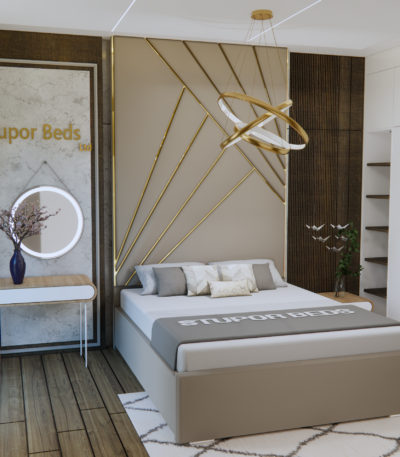
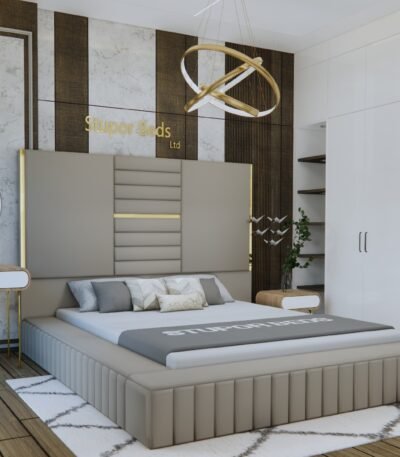
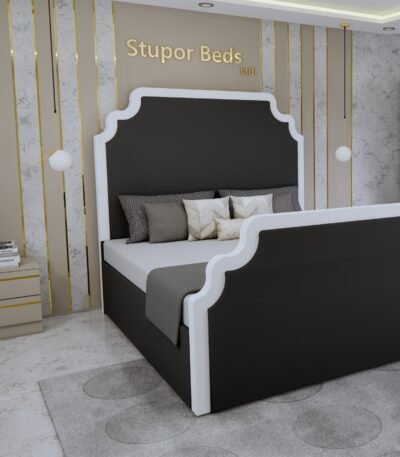

Strip Beds: Upholstered Vertical-Channel Bed Frames, Built to Your Size
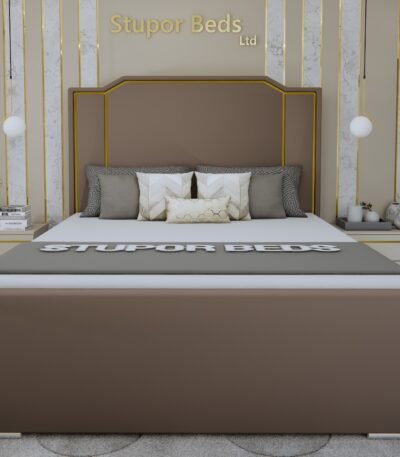
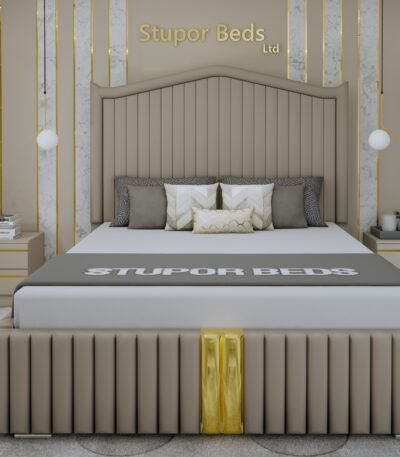
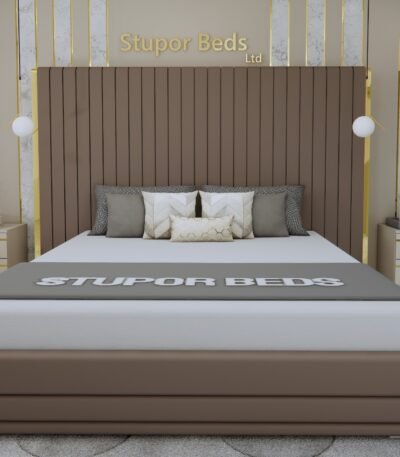
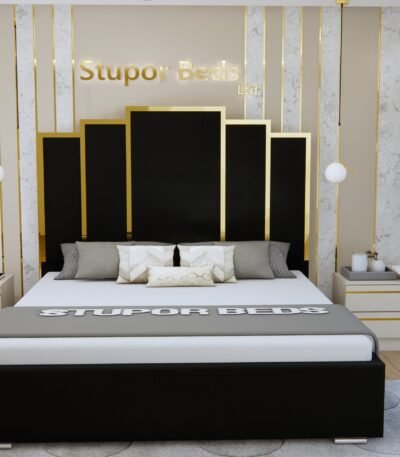
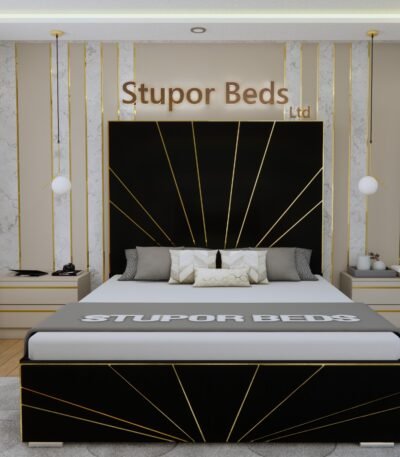
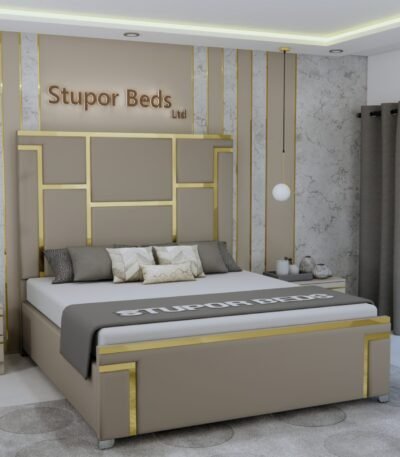
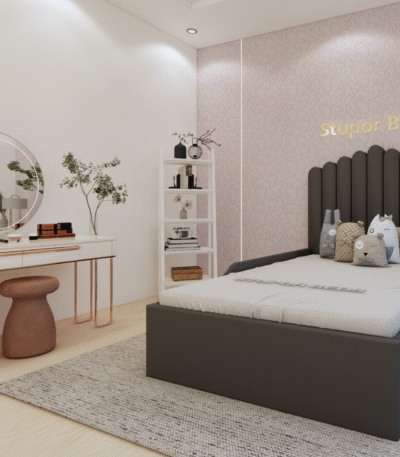
A strip bed is an upholstered bed frame with a headboard finished in vertical channel stitching — a run of neat, padded columns from top to bottom, rather than one flat upholstered panel. The channels are formed by stitching the fabric down at regular intervals over foam padding, which is what gives the surface its rigid, tailored look and its name in the UK furniture trade.
It’s a different construction to a plain divan headboard or a buttoned chesterfield: there’s no diamond tufting and no wings, just clean vertical lines that read as considered rather than plain. That’s exactly why it works so well as the one piece of furniture your eye lands on first — a bedroom with a flat, unstructured headboard rarely has anywhere for the eye to settle, and a run of crisp vertical channels gives it one without shouting for attention.
Our strip bed collection is built in nine fabrics and more than 40 colourways, across five UK sizes from a 3ft single to a 6ft super king, with a choice of headboard height, gas-lift ottoman or drawer storage, and a matching mattress if you need one. The rest of this page walks through how they’re built, how to choose a fabric and size that suit your room, and how our range compares with what else is on the UK market.
The Anatomy of a Premium Strip Bed Frame
The channels themselves do most of the visual work, so how they’re stitched matters. A well-made strip headboard uses evenly spaced vertical seams — usually four to six per headboard width, depending on size — stitched through a foam layer thick enough that the channels stay rounded rather than flattening out within a few months of leaning against them. Thin padding is the most common corner cut on cheaper strip beds: the channels look crisp in a product photo and go flat within a season of actual use.
Underneath the upholstery, the frame is built on timber with a slatted base, which is the same construction most UK divan and frame beds use and gives sprung and foam mattresses even, breathable support. On our range, the headboard height is adjustable in 10cm increments — up to an extra 40cm over standard — so you can decide between a low, understated line or a tall, more dramatic one without changing the bed underneath it.
One detail worth knowing before you order: a tall headboard on a wide bed doesn’t always travel well through a narrow stairwell or a period doorway in one piece. If access is tight, a split headboard — built in two sections that join once it’s in the room — solves this without you having to size down the bed to fit the route to your bedroom. It’s worth checking your stairwell and doorway width before choosing a headboard height, and worth asking about the split option if either is under about 80cm.
A matching, upholstered footboard finishes the frame, so the strip detailing isn’t limited to the headboard — it carries the same tailored line all the way round the bed rather than stopping abruptly where the mattress begins.
Ottoman vs Slat Bases: Maximising Storage in a Strip Bed
A strip bed’s base does more than hold the mattress up, and it’s worth deciding on storage before you fix on a size, because the base you choose affects both the price and how much you can fit under the bed.
A standard slatted base is the lightest and most affordable option. It gives good mattress ventilation and is the right choice if you don’t need underbed storage, or if you’re planning to use freestanding under-bed boxes instead.
Gas-lift ottoman storage replaces the slats with a hinged, gas-assisted platform that lifts the entire mattress deck to reveal a storage void underneath — useful in a room without a wardrobe to spare, or for bedding and out-of-season clothes you don’t want on permanent display. On our range this opens from the end of the bed rather than the side, so it’s worth checking there’s enough clear floor space beyond the foot of the bed frame — roughly the width of the bed itself — for the lid to lift fully.
Drawer storage is the alternative if end-lift access isn’t practical, for example in a room where the bed sits against a wall at the foot end. Two or four drawers run on metal runners beneath the frame and open from the side, so it suits rooms where floor space is at more of a premium at the foot of the bed than along its length.
If you’re still deciding, the honest answer is that ottoman storage holds more but needs more clearance to open, while drawers hold less but work in a tighter room. Either way, adding a mattress to the same order — our range runs from a 1000-pocket spring up to a 3000-pocket pillow-top — is worth doing at the same time, since it saves a second delivery and lets you set the whole sleep surface up to firmness and feel rather than piecing it together separately.
The Interior Design Guide: Styling Velvet, Linen, Chenille and Bouclé
The fabric you choose changes how the channels read as much as the stitching does, so it’s worth thinking about light, wear and cleaning together rather than colour alone.
Plush and crushed velvet catch light differently down each channel, which is what gives a velvet strip headboard its depth — plush velvet has a flatter, more even pile that reflects light consistently along the seam, while crushed velvet’s uneven pile scatters it, giving a slightly more textured, lived-in look. Both pair naturally with warm brass or gold accents and suit a bedroom that leans traditional or a little dressed-up.
Chenille has a looser, more textured weave that reads as softer and more casual than velvet, and it tends to show less surface marking day to day, which makes it a sound choice for a bedroom that gets a lot of use — children bouncing on the bed, pets settling against the headboard, that kind of everyday wear.
Bouclé (our “teddy” fabric) has become the fabric people reach for in a Scandinavian or “quiet luxury” bedroom, largely because its looped, nubbly texture softens the sharp lines of channel stitching into something rounder and cosier looking. It photographs beautifully but is worth pairing with a fabric protector if you’re prone to eating in bed, since the looped texture can hold onto crumbs and spills more than a flat weave.
Linen gives the most relaxed, textural finish of the group and suits a neutral, natural-materials bedroom — pale oak furniture, woven baskets, that sort of palette. It creases less dramatically than dress linen because it’s backed and padded, but it will still show more texture variation than velvet or faux leather.
Faux leather is the most practical choice for a strip bed if easy wiping matters more than softness — spills sit on the surface rather than soaking in, so a damp cloth is usually enough. It reads as more contemporary than the other fabrics and pairs well with a monochrome or industrial-leaning room.
As a general styling rule, a strip bed in a light neutral (mink, putty, sand) works as a backdrop you build a room around, while a strip bed in a saturated colour (teal, sage, midnight) works better as the room’s one statement piece — so keep the surrounding furniture and walls plainer if you go bold on the bed. Our full customisable beds range shows more combinations if you want to see fabric and colour together before deciding.
Sizing and Practical Spatial Planning for UK Bedrooms
Getting the size right matters more for a strip bed than a plain frame, because the vertical channels make the headboard read taller and more prominent than a flat one of the same actual height — so a room that would happily take a plain 90cm headboard can start to feel crowded with a channel-stitched one that’s visually busier.
As a working guide for UK room sizes: a single (3ft) or small double (4ft) suits a box room or a child’s room from around 2.4m wide; a standard double (4ft6) is comfortable from about 2.7m of wall width once you allow room to walk around both sides; and a king (5ft) or super king (6ft) is worth measuring carefully against — you’ll generally want at least 3.2m of wall width for a king to leave 50–60cm of walking space on each side, which is the minimum for the bed to feel usable rather than wedged in.
Headboard height interacts with ceiling height too, more than people expect. A standard headboard sits comfortably under most UK ceiling heights, but adding the full 40cm of extra height starts to look disproportionate in a room with ceilings below about 2.4m — in a low room, a shorter headboard with a bolder fabric or colour tends to read better than a tall one that closes the room in visually.
Before ordering, measure three things: the wall width where the bed will sit (with the size you’re considering marked out with tape, if you can), the width of your narrowest doorway or stairwell turn between the entrance and the bedroom, and the floor space beyond the foot of the bed if you’re choosing ottoman storage. That third measurement is the one people forget, and it’s the one that determines whether the storage you paid for actually opens.
The Fabric Comparison Matrix
Martindale rub counts are the standard UK measure of how many rubbing cycles a fabric withstands before it visibly wears — the numbers below are typical ranges for each fabric type generally, not a lab certificate for a specific bed, but they’re a fair starting point for comparing wear against look and upkeep.
| Fabric | Typical Durability (Martindale) | Aesthetic Vibe | Ease of Cleaning |
|---|---|---|---|
| Plush velvet | ~30,000+ | Formal, even sheen | Vacuum with soft brush; blot spills fast |
| Crushed velvet | ~15,000–25,000 | Textured, dressed-up | Slightly more prone to flattening; brush to lift pile |
| Chenille | ~30,000+ | Soft, casual, family-friendly | Wipes clean easily; resists surface marking |
| Bouclé (teddy) | ~20,000–30,000 | Cosy, Scandinavian | Looped texture traps crumbs; protector spray recommended |
| Linen | ~15,000–25,000 | Relaxed, natural | Light vacuuming; avoid soaking |
| Faux leather | High (rated in double rubs, not Martindale) | Contemporary, sleek | Wipe clean with a damp cloth |
Frequently Asked Questions
Do strip beds make a small bedroom look bigger or smaller?
It depends on headboard height and fabric colour, not the strip detailing itself. A tall, dark headboard in a small room will feel more enclosing, while a standard-height headboard in a light colour tends to disappear into the wall behind it. If your room is on the smaller side, choose a lighter colourway and skip the extra headboard height options.
Can you use any mattress with a strip bed frame?
Yes, provided it matches the frame’s size and base type. Our strip beds work with pocket-sprung, memory foam hybrid and pillow-top mattresses from 1000 to 3000 pockets, and you can also order the frame on its own if you already have a mattress that fits.
What’s the difference between a strip bed and a divan bed?
“Divan” describes the base construction — a solid or sprung box base rather than a slatted frame — while “strip bed” describes the headboard style. Many strip beds, including ours, are available on either a divan or a slatted frame base, so the two terms describe different parts of the same bed rather than competing styles.
Do strip beds come with storage options?
Yes. Our range offers gas-lift ottoman storage, which lifts the mattress deck from the end of the bed, or two or four under-bed drawers that open from the side. Both are optional additions to the standard slatted base.
How do I clean an upholstered strip bed headboard?
Vacuum along the channels weekly with a soft brush attachment to stop dust settling in the seams, and blot (rather than rub) any spills immediately with a clean, dry cloth. Velvet and bouclé benefit from an occasional fabric protector spray; faux leather just needs a damp cloth.