
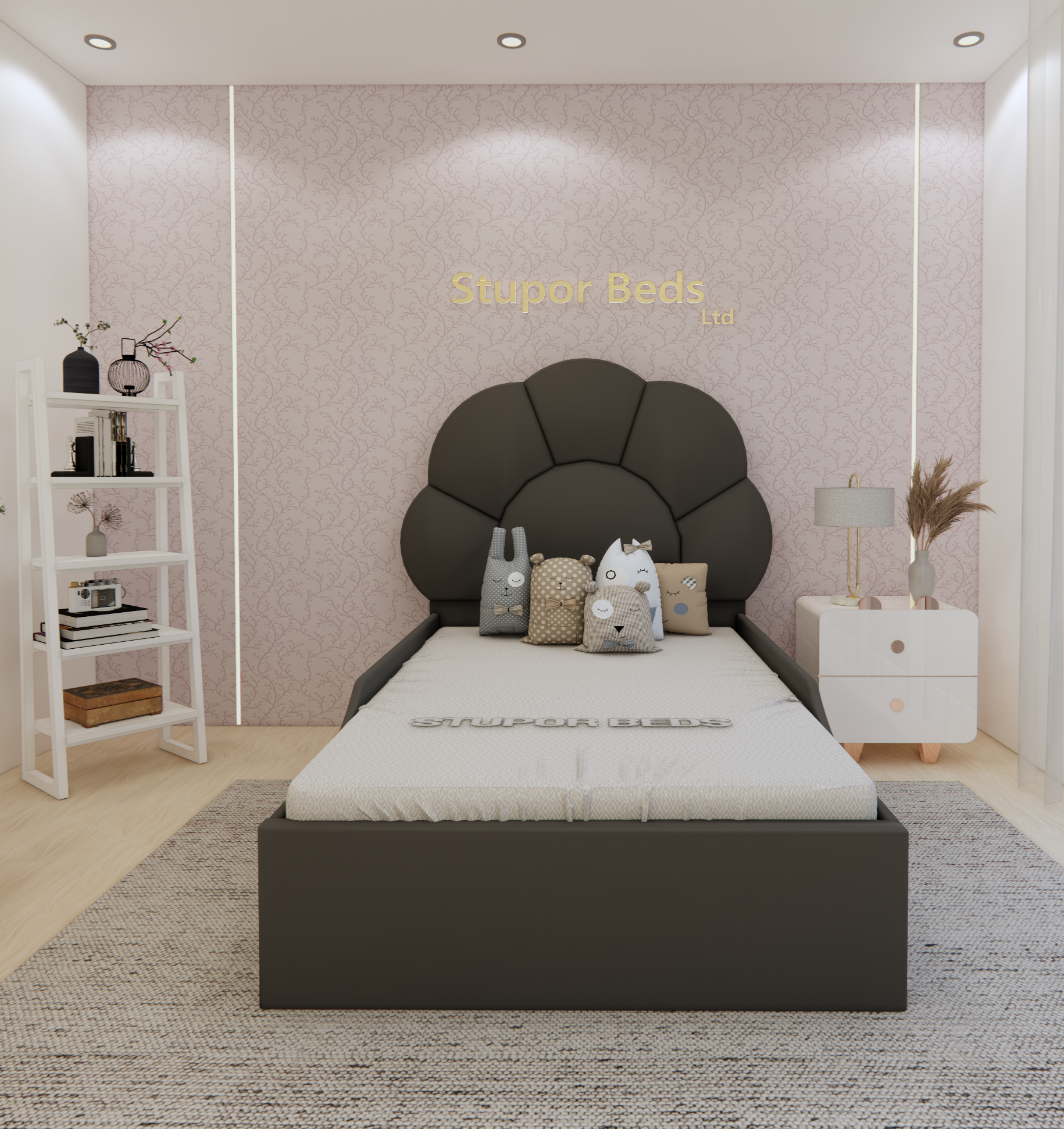
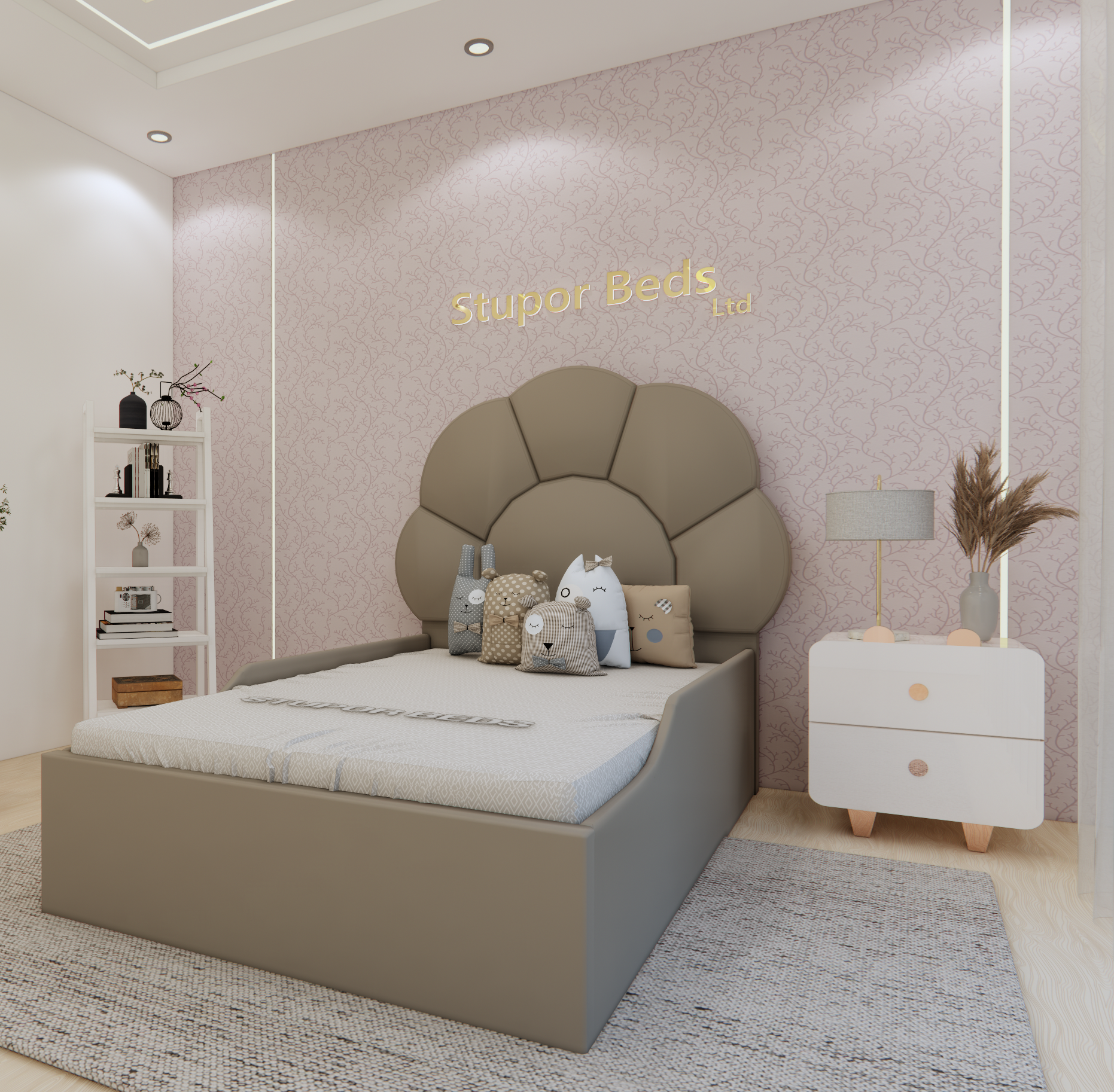
Dokia Kids Bed — The Low Kids Bed UK Parents Are Switching To in 2025
There’s a moment every parent recognises. Your child hauls themselves over the cot rail for the third time this week, and you realise — it’s time. Time for a real bed. A safe bed. One your child can climb into on their own, sleep soundly in, and actually feel proud of.
That’s exactly what the Dokia Kids Bed from Stupor Beds & Mattresses was designed for. A purpose-built low kids bed that puts your child’s safety, independence, and sleep quality first — without sacrificing an ounce of design quality.
What Is a Low Kids Bed — And Why Does It Matter More Than You Think?
A low kids bed is a bed frame designed to sit significantly closer to the ground than standard children’s beds — typically between 20–35cm in total sleeping height. That doesn’t sound dramatic, but for a 3–6 year old, the difference is enormous.
Unlike traditional toddler beds raised 12–18 inches off the ground with safety rails, a low kids bed eliminates fall risk while promoting autonomy through easy, independent access.
Most UK bedroom retailers — from Wayfair to Next — sell children’s beds based on what looks impressive in a photograph. Cabin beds, mid-sleepers, themed novelty frames. What they consistently fail to mention is the practical and developmental reality: for children under 6, a low kids bed is the safest, most developmentally appropriate sleeping surface on the market.
The Dokia changes that conversation.
Why Competitors Are Missing the Point
Here’s what the Children’s Bed Shop, Bensons for Beds, Wayfair, and Dreams all do well: they offer variety. Dozens of kids’ beds across dozens of styles.
Here’s what none of them offer on their low kids bed pages: a genuine explanation of why bed height is one of the most important decisions you’ll make for your child’s development.
Bed height affects safety and falling risks directly — the American Academy of Pediatrics (AAP) notes that selecting the correct age-specific height reduces these risks and allows children to learn to get in and out of bed independently. Small Smart
Low children’s beds encourage self-regulation by enabling children to act on their own wake and sleep cues. Small Smart That’s not marketing. That’s child development science — and it’s the foundation the Dokia is built on.
The Dokia Kids Bed — What Makes It Different
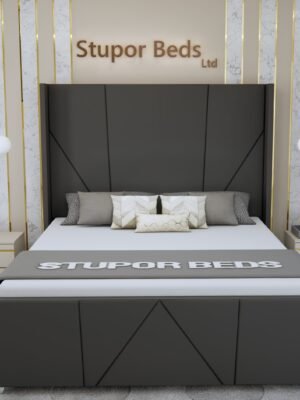
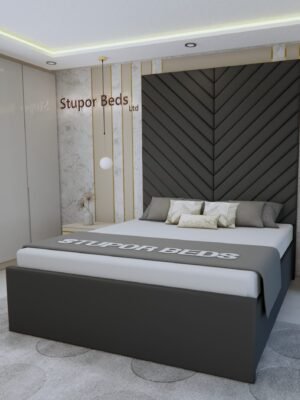
The Dokia is not a novelty bed. It is not a themed frame that photographs well and dates itself within two years. It is a clean, considered, low-profile single kids bed frame built for the way children actually live in their rooms — bouncing, reading, sprawling, growing, and eventually sleeping like a log.
What the Dokia delivers:
- Genuinely low-profile frame height — close enough to the ground to eliminate meaningful fall risk, high enough to allow proper airflow underneath the mattress and easy floor cleaning
- Robust, sturdy construction — a frame built to absorb the physical reality of childhood without wobbling, creaking, or losing integrity over time
- Smooth, child-safe surfaces throughout — no sharp metal fixings, no rough edges, no protruding hardware that restless bodies can find in the night
- Solid slatted base — evenly spaced for full mattress support and proper spinal load distribution; critical for growing bodies that spend 9–11 hours a night in contact with their sleeping surface
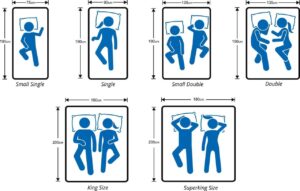
- Standard UK single size — 90cm × 190cm — the most widely recommended children’s bed size by UK sleep professionals, fitting standard UK children’s bedrooms and compatible with every quality single mattress on the market
The Science Behind Why Your Child Sleeps Better in a Low Bed
This is the part you won’t find on Wayfair’s product listings or the Children’s Bed Shop category pages.
Children’s sleep quality is directly tied to how secure and in-control they feel in their sleep environment. According to Johns Hopkins All Children’s Hospital, children who consistently get quality sleep show measurably better attention, memory, behaviour, learning ability, and long-term physical health.
A low kids bed works with a child’s developing autonomy rather than against it. Instead of bedtime becoming a power battle, children can access quiet activities if they’re not immediately sleepy, then settle into bed when their body signals readiness.
That is not an abstract benefit. Parents who make the switch to low-profile kids beds consistently report faster bedtime compliance, fewer night-waking incidents, and — perhaps most valuably — children who feel ownership of their own sleep routine from an early age.
Without crib rails restricting movement, children learn to climb in and out of bed on their own. This autonomy helps build confidence and encourages self-soothing as part of a healthy sleep routine. Small Smart
The Montessori Connection — Child-Led Sleep That Actually Works
The Dokia’s low-profile design naturally aligns with what Dr. Maria Montessori identified over a century ago: children thrive when given environments that support freedom of movement and independent decision-making.
A Montessori bed is a child-friendly sleeping solution designed to promote independence, self-confidence, and freedom of movement. Unlike a standard children’s bed that is often raised, it is usually low to the ground, allowing little ones to climb in and out safely on their own.
You don’t need to be a Montessori household to benefit from this design philosophy. Every parent wants a child who climbs into bed when they’re tired, without negotiation. A low kids bed like the Dokia makes that far more achievable — because the bed never becomes a barrier between the child and sleep.
A low-rise bed lets children climb in and out on their own, which supports self-reliance and confidence. Newton Baby As developmental benefits compound, children who develop these sleep habits early carry them forward — better rested, more regulated, and easier to settle every single night.
Who Is the Dokia Built For?
Age: Children from 3 years upwards, through primary school and beyond. Low sleeper beds are an ideal next step as children transition from toddler beds into a more grown-up sleeping space, and are suitable for kids aged 4 and up. Beds & Bed Frames The Dokia serves this transition stage perfectly — and keeps serving as your child grows.
Room size: Standard UK single footprint (90 × 190cm) — designed for real UK children’s bedrooms, most of which measure under 10 square metres. The Dokia leaves ample floor space for play, a wardrobe, and a desk.
Sleep type: Restless sleepers, early risers, children transitioning from cots, and children whose current bed makes bedtime a battle.
Design life: The Dokia’s clean, unfussy aesthetic doesn’t “age out.” It works equally well in a 4-year-old’s colourful bedroom and a 10-year-old’s more grown-up space — no replacement needed until they genuinely outgrow a single frame.
Low Kids Bed vs. Raised Kids Beds — The Comparison Every Parent Should Read Before Buying
Most competitors in the UK children’s bed market push elevated designs — cabin beds, mid-sleepers, high-sleepers — because they photograph beautifully, carry higher margins, and generate more search traffic around exciting, aspirational terms. What they rarely offer is an honest side-by-side comparison of what suits a young child’s actual needs.
Here it is:
| Consideration | Raised Kids Bed (Cabin / Mid-Sleeper) | Dokia Low Kids Bed |
| Minimum safe age | 6 years+ (UK industry standard) | 3 years+ |
| Fall risk | Significant — potential 70–150cm drop | Minimal — 20–35cm sleeping height |
| Guard rail required | Yes — essential for safety | Not needed at this height |
| Independent access | Requires ladder, adult supervision | Child accesses freely from age 3 |
| Bedtime routine impact | Can escalate into power struggles | Child-led access removes friction |
| Bedroom versatility | Dominates the room visually | Clean footprint, room for play |
| Design longevity | Often theme-specific or space-specific | Neutral, grows with child to teens |
| Gross motor development | Ladder access can be stressful | Floor-level movement builds confidence |
The Dokia wins on every category that matters most for the 3–8 age group. Elevated beds have their place — from age 6 onwards, when children have the coordination, confidence, and understanding to use a ladder safely. Before that, a low kids bed is the right call.
5 Signs Your Child Is Ready for the Dokia Right Now
Not sure if it’s time? Here are the five readiness signals child development specialists consistently point to:
- They’re climbing out of their cot. This is the clearest signal. The American Academy of Pediatrics (AAP) recommends moving a child out of the crib once they reach 35 inches tall, which often happens between 18 and 24 months — at this height, many toddlers begin trying to climb over the cot rails. Bensons for beds
- They’re asking for a “big bed.” Children who express interest in a grown-up sleeping space are primed for a positive transition — and the Dokia’s clean, non-babyish design meets that ambition.
- They wake up and wander independently. If your child is already moving around their room at night or early morning, a low bed supports safe, self-directed movement without adult intervention.
- Their cot feels cramped. Growing bodies need more room to move during sleep. Restricted sleep positions affect sleep quality — the Dokia’s full single size gives them the space to sprawl freely.
- Bedtimes are becoming a battle. When getting into or out of a raised bed requires adult help, children lose ownership of the routine. A low kids bed gives it back to them.
Choosing the Right Mattress to Pair With the Dokia
The Dokia is sold as a standalone bed frame, which means you choose the mattress that suits your child. Here is what sleep specialists actually recommend — information you won’t find on most competitor product pages:
Firmness level: Children’s mattresses should sit at medium-firm (6–7 out of 10) on the firmness scale. Firm enough to support proper spinal alignment during the 9–11 hours of sleep school-age children need every night. Soft enough for comfort through restless movement.
Construction type: A pocket-sprung or hybrid mattress (foam layers combined with individual spring units) delivers the best combination of body-adaptive support, pressure relief, and temperature regulation — far superior to cheap open-coil or basic foam alternatives that lose support within 12–18 months.
Height for the Dokia: A mattress between 15–22cm works perfectly with the Dokia’s frame, keeping the overall sleeping height safely low while providing sufficient comfort depth.
Safety certifications to look for:
- EN 71-3 — confirms non-toxic surface finishes safe for children’s skin contact
- CertiPUR® certified foam — free from harmful VOCs, heavy metals, and formaldehyde
- OEKO-TEX Standard 100 — independent verification of chemical safety across all materials
- BS 7177 fire safety compliance — UK flammability standards met
Browse our range of paired children’s single mattresses at Stupor Beds & Mattresses — each selected to work in harmony with the Dokia’s slatted base for the optimum children’s sleep surface.
Setting the Dokia Up for Success: Room Layout That Works
Unlike competitors who sell you a bed and leave you to figure out the rest, here’s exactly how to set up a room around a low kids bed:
Position the Dokia against one wall — this creates a natural sense of enclosure on one side without blocking access. Children sleep better with at least one solid boundary, and it keeps morning wandering in a predictable direction.
Add a soft rug on the open side — a washable, padded rug serves double duty: morning comfort for bare feet and a landing cushion for the rare restless roll. Choose one large enough to extend 30–40cm beyond the mattress edge.
Keep storage low and accessible — the Montessori principle applies beyond the bed. Bookshelves, toy storage, and clothing solutions at child height reinforce the independence the Dokia already encourages. Children who can organise their own space sleep in less cluttered, calmer rooms.
Use blackout blinds — the UK’s variable daylight hours mean summer mornings start at 4:30am in some regions. Good blackout coverage, paired with the secure sleep environment the Dokia provides, is the most effective combination for consistent sleep patterns.
Choose bedding that your child picks — children who feel ownership of their sleep space settle faster. Let them choose the duvet cover. The Dokia’s neutral frame suits everything from dinosaurs to football to minimalist linen.
Why Stupor Beds & Mattresses — Not a Flat-Pack Furniture Giant
When you browse Wayfair, you’re scrolling through thousands of anonymous products from dozens of suppliers, assembled to a brief and shipped in a box. When you buy from Stupor Beds & Mattresses, you’re buying from a specialist retailer that has actually thought about which beds belong in a child’s room — and why.
The Dokia is in our range because it solves the real problem: finding a low kids bed that is genuinely safe, genuinely durable, and genuinely considered — not just the cheapest option with the right dimensions.
Every bed we stock is selected for build integrity, design longevity, and family practicality. No gimmicks. No novelty that dates itself in two years. Just beds that work.
✔ Genuinely low-profile frame — safer from day one ✔ Robust single construction — built for real children ✔ Standard UK single 90 × 190cm — fits any quality mattress ✔ Child-safe surfaces, solid slatted base ✔ Design that grows from age 3 through to the teenage years ✔ Fast UK mainland delivery — no months-long lead times
Frequently Asked Questions
What exactly is a low kids bed and how low is it? A low kids bed is a frame designed to sit significantly closer to the floor than a standard children’s bed — typically placing the sleeping surface between 20–35cm from the ground. At this height, children aged 3 and above can climb in and out independently, and the risk of injury from falls is dramatically reduced compared to elevated frames.
What age is the Dokia Kids Bed suitable for? The Dokia is ideal from age 3 upwards — the point at which most children are ready to move from a cot or toddler bed into their first proper single. It will serve your child comfortably through primary school and beyond.
Is a low kids bed better than a cabin bed or mid-sleeper? For children under 6, yes — unambiguously. UK children’s bed safety guidance recommends low single frames for young children, with mid-sleepers and cabin beds reserved for ages 6 and above when children can safely navigate a ladder. The Dokia is the appropriate choice for the transition years.
What size mattress does the Dokia need? A standard UK single mattress — 90cm × 190cm (3’0″ × 6’3″). We recommend a mattress between 15–22cm in depth to maintain a safe, low sleeping height.
Does the Dokia come with a mattress? The Dokia is sold as a bed frame. Browse our paired children’s single mattresses, each selected to work perfectly with the Dokia’s slatted base.
Is the Dokia Montessori-compatible? Entirely. Its low-to-the-ground design is the defining feature of Montessori-inspired children’s bed design — supporting child-led sleep routines, independent access, gross motor development, and the kind of sleep confidence that makes bedtimes easier for the whole family.
Will the Dokia fit in a small UK bedroom? Yes. The standard single footprint fits comfortably in most UK children’s bedrooms (typically under 10m²), leaving room for a wardrobe, bookshelf, play space, and eventually a desk as your child grows.
How does a low kids bed improve my child’s sleep? By removing the barriers between your child and sleep. When a child can access their bed independently, act on their own tiredness, and feel secure close to the ground, they fall asleep faster, wake less frequently, and develop self-regulated sleep habits that serve them for years.
Your child’s best nights of sleep start here. Order the Dokia Kids Bed today — fast UK mainland delivery, specialist service, no compromise on quality.
foot 12
lower 12
high part 18
3 inches extended each side
Bed Dimensions: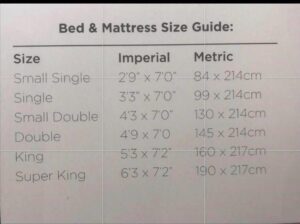 Mattress Dimensions:
There are no reviews yet. Be the first one to write one.